- Near complete rewrite. The code is now much cleaner
- Fewer modem commands used. Fewer commands == fewer places to go wrong!
- Starlancer now supported! Starlancer now works with 100% connection success rate!
Sunday, 29 November 2015
DreamPi 0.97 Released!
This release is a major release!

Saturday, 28 November 2015
DreamPi 0.96 released!
This version is a minor release:
- IP address autoconfiguration. The DreamPi now tries to use IP addresses .98 (for the Dreamcast) and .99 (for the Pi). If these IP addresses are taken it adjusts downwards to find the next available IPs.
- DNS now available to other machines. For testing the DNS server is now accessible by any machine on the network, not just the Dreamcast.
Thursday, 26 November 2015
DreamPi 0.95 Released
This is a bug fix release:
- Pi <> Modem communication now happens at a constant safe baud rate
- The PPP peers file is now configured with the max speed of the modem, this increases performance and hopefully fixes connection issues that some people were having during PPP negotiation
- The Starlancer DNS is now configured in the dnsmasq configuration directly rather than hitting an upstream nameserver. This should hopefully fix DNS issues
Monday, 23 November 2015
DreamPi 0.94 Released
This is a minor bug fix release:
- Fixed a bug in the DNS configuration
- Cleaned up the log output
- Added a pause before answering to hopefully make things more reliable
Saturday, 7 November 2015
DreamPi 0.93 Released!
This release is a minor release.
- New DNS servers added. Starlancer and Quake 3 should work now.
Friday, 6 November 2015
DreamPi 0.92 Released
This release includes the following new features:
- Dial-tone generation. The DreamPi software now plays an 8 bit audio recording of a dial tone across the phone line to trick the Dreamcast into dialling. Blind dialling is no longer a requirement!
- Custom DNS server. There is a DNS server now running directly on the Pi. Not only does this cache DNS requests which makes things a little quicker, but also it allows us to convince the Dreamcast that old sites and game servers are back online! To see this in action, try entering the "Internet" section on Sonic Adventure and visit the website!
- Bug Fixes! Lots of bug fixes to the order of AT commands etc. hopefully more modems will be able to work with the Pi
- Auto-configuration. On boot the software will detect your network subnet and update its configuration accordingly.
Friday, 7 August 2015
SEGA Won't Build a Dreamcast 2. But Could We?
The SEGA Dreamcast was an iconic console. To many, it is regarded as
the greatest console that has ever been released. Since its untimely demise many fans
have hoped that SEGA would re-enter the hardware industry and release a
Dreamcast 2 - an updated but truely backwards-compatible successor to the
original hardware.
This is very unlikely to happen. Consoles are expensive, if SEGA did re-enter the game and it was a failure (which is pretty likely) it would probably kill SEGA entirely.
There is however a petition online to design a Dreamcast 2 which would be built-to-order, nullifying much of the risk. This actually isn't a terrible idea. Designing an updated version of the original Dreamcast, with perhaps even the same specifications but with modern connections (LAN vs Dial-up, HDMI vs VGA, HDD vs VMU) probably could be done by a small internal team. The very people interested in this kind of hardware would be willing to pay above the cost of manufacture to own it. SEGA could make a profit on the hardware, and as suggested in the petition, provide an online store for purchasing digital versions of the classic games that already exist. If they opened that store up to indies then that would be a bonus.
But still, this is very unlikely to happen. SEGA is primarily a software company now, and most of the team that designed the Dreamcast probably moved on long ago. But that doesn't necessarily mean a Dreamcast 2 couldn't be built. The tools needed for a dedicated community to build a Dreamcast clone (let's call it OpenDC) aren't that far way.
There's even better news though. The SH4 CPU which the Dreamcast uses will no longer be patented in 2016 and the Open Processor Foundation is already working on their own version. It's not unlikely that at some point in the next 3-4 years there will be a "J4" system-on-a-chip (SOC) available, it's also probable that any SH4-clone SOC will be higher spec'd than the Dreamcast was, with some kind of OpenGL ES based GPU built in.
If an SH4 based SOC was released, the rest of the problems to solve involve software, peripherals and packaging.
We also already have a free fully featured Dreamcast SDK in KallistiOS, and new games are being released based on it even now. This means that the community could provide an online store for new homebrew games written for the new console. This could be accessed through the OpenDC launcher and download games directly to disk.
The dial-up modem could be emulated in software. This just leaves the controllers. With 3D printing really taking off now, it's quite probable that over the next few years it will be possible to print electrical connections into plastic. When that happens, 3D printing a case for the console, complete with Dreamcast compatible controller ports would simply just be a case of sending a design to Shapeways.
If using old Dreamcast controllers isn't enough, a custom community-designed controller could be made using 3D printing and software like Fritzing.
This is very unlikely to happen. Consoles are expensive, if SEGA did re-enter the game and it was a failure (which is pretty likely) it would probably kill SEGA entirely.
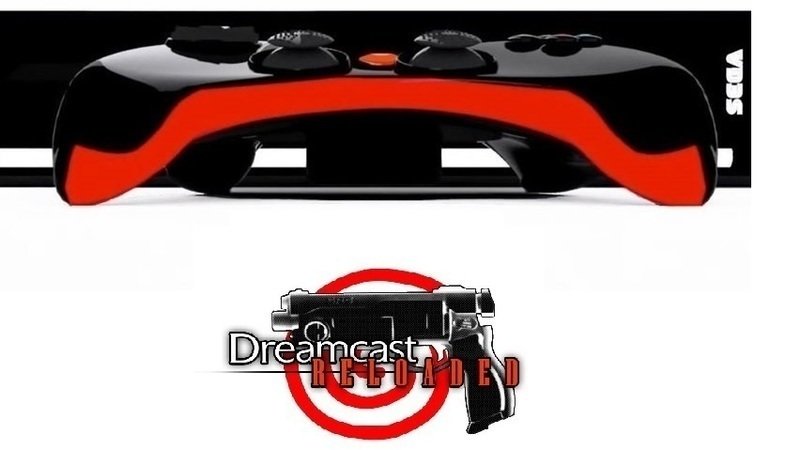 |
| Image from the Dreamcast 2 Petition on Change.org by Ben Plato |
There is however a petition online to design a Dreamcast 2 which would be built-to-order, nullifying much of the risk. This actually isn't a terrible idea. Designing an updated version of the original Dreamcast, with perhaps even the same specifications but with modern connections (LAN vs Dial-up, HDMI vs VGA, HDD vs VMU) probably could be done by a small internal team. The very people interested in this kind of hardware would be willing to pay above the cost of manufacture to own it. SEGA could make a profit on the hardware, and as suggested in the petition, provide an online store for purchasing digital versions of the classic games that already exist. If they opened that store up to indies then that would be a bonus.
But still, this is very unlikely to happen. SEGA is primarily a software company now, and most of the team that designed the Dreamcast probably moved on long ago. But that doesn't necessarily mean a Dreamcast 2 couldn't be built. The tools needed for a dedicated community to build a Dreamcast clone (let's call it OpenDC) aren't that far way.
Patents are Expiring
The Dreamcast was released at the tail end of 1998. Given that patents only last 20 years in most countries, and that most of the Dreamcast patents (e.g. for the GD-ROM) were patented in 1997, the Dreamcast will essentially be free to clone in a couple of years.
There's even better news though. The SH4 CPU which the Dreamcast uses will no longer be patented in 2016 and the Open Processor Foundation is already working on their own version. It's not unlikely that at some point in the next 3-4 years there will be a "J4" system-on-a-chip (SOC) available, it's also probable that any SH4-clone SOC will be higher spec'd than the Dreamcast was, with some kind of OpenGL ES based GPU built in.
If an SH4 based SOC was released, the rest of the problems to solve involve software, peripherals and packaging.
Software
On the software front, we have a bit of a head start. Linux is free, open source and supports the SH4 architecture. The community would need to build a Linux based OS with a basic graphical launcher, and provide any libraries which the Dreamcast executables call into. It's a fair amount of work, but there shouldn't be anything impossible here.
We also already have a free fully featured Dreamcast SDK in KallistiOS, and new games are being released based on it even now. This means that the community could provide an online store for new homebrew games written for the new console. This could be accessed through the OpenDC launcher and download games directly to disk.
Peripherals
The biggest issue on the peripheral side is the GD-ROM. This will either have to be custom made when the patents expire, or alternatively, the community would need to develop new firmware for an existing CD-ROM model. Another option would be to forgo the GD-ROM drive entirely, but that wouldn't really fulfil the backwards compatibility that everyone would like.
The dial-up modem could be emulated in software. This just leaves the controllers. With 3D printing really taking off now, it's quite probable that over the next few years it will be possible to print electrical connections into plastic. When that happens, 3D printing a case for the console, complete with Dreamcast compatible controller ports would simply just be a case of sending a design to Shapeways.
If using old Dreamcast controllers isn't enough, a custom community-designed controller could be made using 3D printing and software like Fritzing.
The Dream is Still Alive!
So, even though SEGA may never release another console, a driven and dedicated community following open source practices could build another Dreamcast. We might just have to wait a few more years to see it.
Subscribe to:
Posts (Atom)